


















Over the past few months, many netizens have been struck by videos of Punch, the baby monkey being bullied and ostracized by his fellow primates in a zoo enclosure. In this article, we will delve deep into the “punchy” lore of the tiniest internet celebrity and get to the core of the tragic truth of the savage society at the Ichikawa City Zoo.
Punch, short for Panchi-kun, is an eight-month-old macaque who lives full time at Japan’s Ichikawa City Zoo. At birth, Punch was abandoned by his mother because of, what experts described as, a lack of interest in raising him. Not long after this separation, caretakers at the zoo decided to take action and raise Punch themselves. As babies, macaque monkeys are heavily reliant on their mothers for safety , warmth, and food. Without his mother present to guide and teach Punch how to be a proper member of the monkey monde, he never truly learned how to socialize. This heartbreaking situation is what led to the viral videos of Punch being picked on by the other monkeys in the zoo. A good analogy for this situation would be when you travel to another country, offend the locals by doing something, and have no idea what you did wrong. In the same way, Punch is only doing what he believes is right because no one has taught him otherwise.
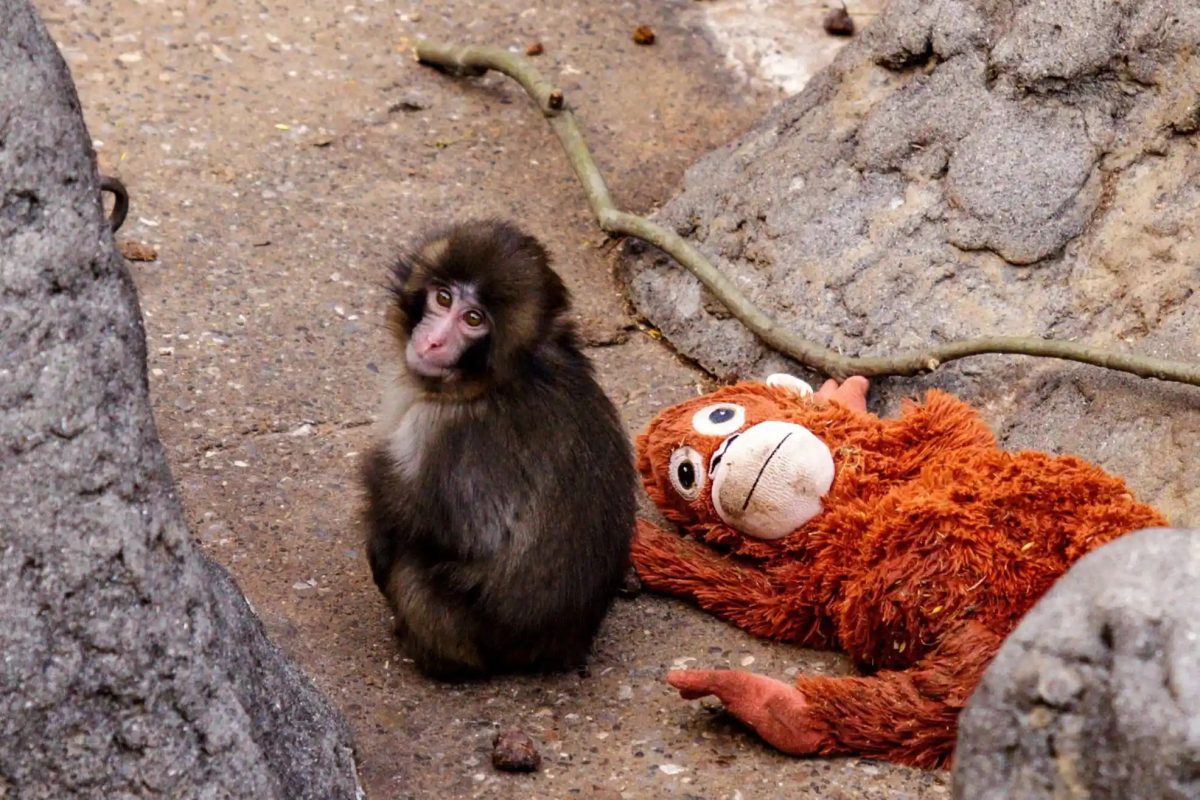
A recognizable attribute of every viral video filmed by Punch’s fans is the stuffed monkey which, seemingly, replaced all sense of tangent closeness for our protagonist. This toy, specifically the brown DJUNGELSKOG monkey from IKEA’s catalogue is how the zookeepers simulate a sense of touch and safety for their ward. In all of the videos of punch being bullied you can see him repeatedly running back to his bright orange stuffed monkey for safety. In the mid 1900s, psychologist Harry Harlow — in his wire mother/cloth mother experiments— discovered that monkeys were hardwired to cling to their mother for “tactile comfort.” He proved that baby monkeys were more likely to spend time with something that they could feel safe around and cling to without providing any function, rather than something that was providing food but no bodily warmth. So when we see Punch run to the stuffed animal for safety, he is simply following instincts innate t0 him from birth. Luckily enough, though, this didn’t last forever and Punch managed to grow out of his constant need for the stuffed animal’s comfort.
In recent reports from zookeepers and journalists alike, we have found that Punch has now become more comfortable around other monkeys . Day by day, we are seeing Punch slowly come out of his shell and become more social. These “baby steps” are seen through small things, like Punch finally eating with his troop instead of his caretaker, like he did for the first five months. He is also seemingly getting along with the younger monkeys, his main zookeeper Shumpei Miyakshi said “From what I could see, there were no scenes of him being scolded, and was observed playing with other baby monkeys.” Overall, Punch, the monkey has come a long way from where he started but, if he keeps moving in the direction he is heading, he will surely do well.