
















Lunar New Year is one of the biggest festivals in the world. It’s celebrated according to the Lunar calendar, and it marks the beginning of a new year. It is a time for families to have get togethers and honor traditions.The Lunar New Year starts with the first new moon of the year and lasts about fifteen days, ending with the first full moon.
It all started thousands of years ago in China during the Shang Dynasty’s rule. It symbolized the end of winter and the arrival of the spring season. The festival became synonymous with the ideas of prosperity and good luck. It also has ties to an old legend that says a dragon-like creature named Nian is said to attack villages at the start of the year. The people figured out that Nian was scared of bright lights, as well as the color red. This legend alludes to why there’s all the red decorations and lanterns we see in today’s celebrations.
In today’s day and age, Lunar New Year traditions vary between cultures. There are still some common traditions, however; for example, most families gather for meals. Homes are cleaned before the holiday to sweep away “bad luck” and decorated with red lanterns and banners to attract positivity and luck for the upcoming year. Red envelopes filled with money are given to children and younger family members as blessings for the year ahead. Junior Sasha Do, who is Vietnamese, loves the tradition of receiving money from her relatives forLunar New Year.
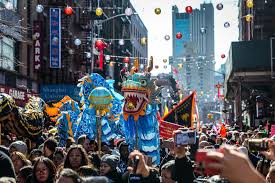
Lunar New Year is celebrated by many East-Asian cultures, each one having special traditions. In Vietnam, for example, the holiday is celebrated with family gatherings and honoring of elder community members. In China, it is the most important festival of the year. South Korea celebrates having traditional clothing, rituals, and folk games. Lunar New Year is also celebrated in places such as Singapore, Malaysia, Indonesia, and Thailand, mostly people with Chinese ancestors. What makes these places Lunar New Year unique is the blend of traditional Chinese customs with local Southeast Asian cultures, creating distinct culinary, religious, and social traditions in each nation. Also people in countries such as the United States and Canada celebrate the festival through gathering with family, sharing traditional meals, and holding public festivities like lion dances, fireworks, and parades in cities with large Asian populations.
Lunar New Year is more than just a festival; it is a time for people to come together, celebrate their culture, and look forward to a fresh start. Even though traditions may be different depending on where it is celebrated, the main ideas of family, good luck, and new beginnings are the same. From bright red decorations and fireworks to family meals and celebrations around the world, Lunar New Year truly creates a sense of unity within its people.