









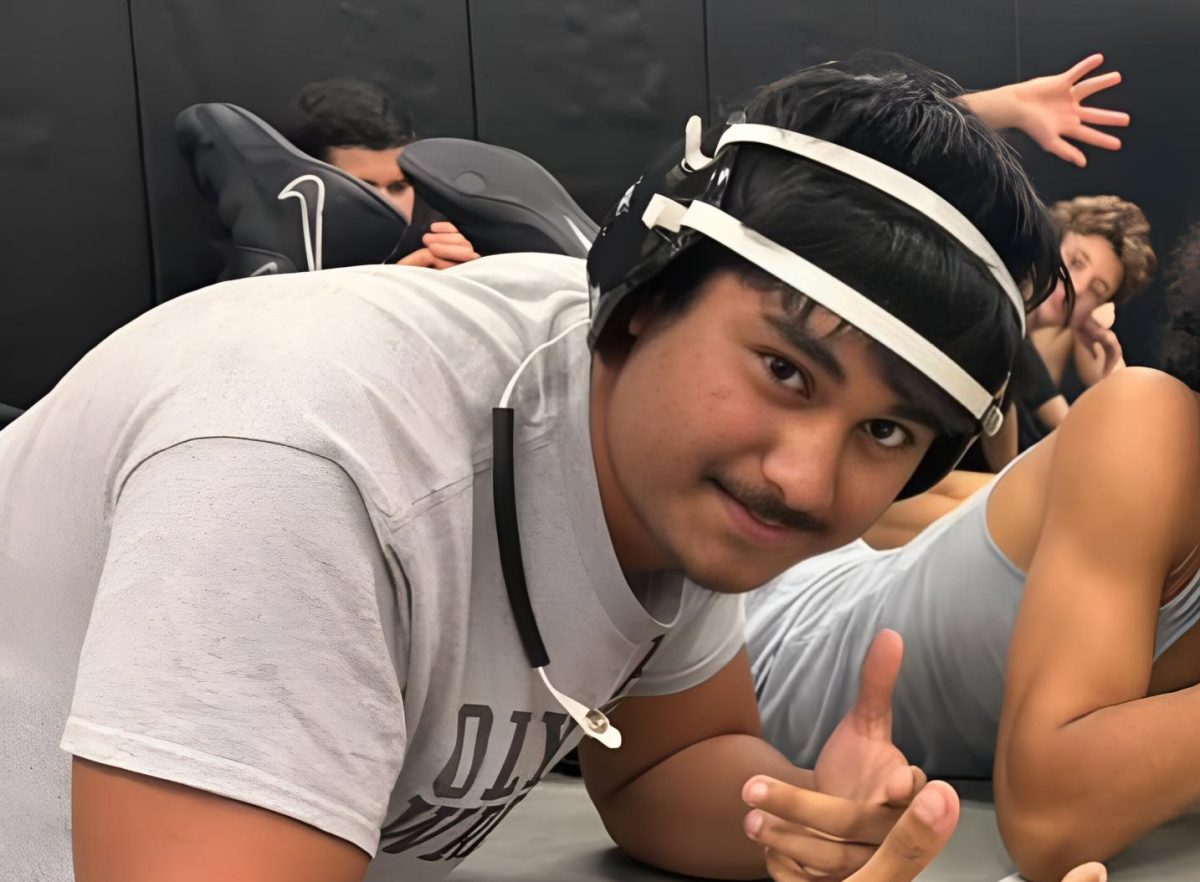













Sometimes being a student-athlete can be mentally and physically challenging for students— whether it’s balancing coursework, recovering from injuries sustained in previous games, or dealing with setbacks. It can be pretty difficult and sometimes frustrating when you want to advance towards the goal of winning. In this article, we will look into a former athlete, Adrian Kemraj, and explore why wrestling posed a significant challenge in his academic and individual journey.
“My sophomore year was when I wanted to do wrestling. I got into wrestling cause I found myself as a really aggressive person, and I think I needed to blow off some steam. At that point in my life, I was carrying a lot of inside stress and frustration, things I didn’t really know how to talk about or process.”
As junior Adrian Kemraj was dealing with a lot of stress and frustration, he needed something to blow all of that steam off; therefore, he turned to wrestling, something he ended up loving.He found it to be his gateway to relax and focus on something that didn’t make his blood pressure rise.
“Wrestling felt like the easiest outlet, but wrestling wasn’t the first sport I tried. I tried fitting in at every other type of sport, but wrestling just called to me. I loved the drills, the excitement I would get from wrestling, the intensity of it, the movement, the way you had no choice but to be present. When I was out there, everything else faded into the background. It wasn’t just about competing; it was about having somewhere to put all that built-up emotion. At first, motivation came naturally.I showed up ready to work, ready to push myself, and ready to prove something- but that alone was really hard. I kept not wanting to go to my practices, and I wasn’t sure if I was even making any progress. The emotion that once pushed me began to feel like I was slipping, and the loss of effort kept going and going. There were days when I kept questioning why I was there. What made it really tough was the feeling of being stuck. Physically, I didn’t feel like I was getting stronger or faster. Mentally, I felt like I was drained instead of energized.”
This stage marked a period of growth; wrestling was no longer an outlet, but it was also a challenge that tested him. Even when he felt drained and unsure of himself, he continued to show up, which helped him shape his mindset and taught him that showing up and keeping consistency matter more than getting instant results.
“All the consistent work I kept showing up for was not showing, and that really messed with me. It was so frustrating not seeing any improvement, especially when you care about a sport as much as I did with wrestling. It slowly blew away my confidence and motivation with the sport, making practices feel so much harder, and I wanted to get over it instead of being excited. Through all of it, though, I stayed a pretty chill guy. I don’t really make a big deal out of things or complain out loud. I kept a lot to myself, just trying to let things flow and stay there, even when I was questioning everything. The calmness I showed hid how much I was actually struggling, but it also helped me go further when things felt off.”
As the season progressed, Kemraj’s relationship with wrestling began to change. What became an outlet for his anger grew into a personal challenge, testing him both mentally and physically. Practices became harder for him, and these things do not go hand in hand. There were so many times when his motivation and effort started to fade. Even continuing to show up, he often felt as if he wasn’t improving in the way he hoped, which led to frustration and self-doubt. Even during those difficult times, he remained committed and determined. Being part of the team taught him discipline and the importance of consistency. He learned that progress isn’t immediate and that growth can happen even during times of struggle. These experiences played a key role in shaping both his mindset and helping him mature as an athlete and person.
Overall, Kemraj’s journey shows that growth isn’t always counted by wins or tangible rewards. His experience highlights the reality that struggle can be just as meaningful as success. Through moments of frustration and self-doubt, he learned valuable lessons about patience and resilience. Remaining true to himself and staying calm allowed him to keep pushing when things felt off not only made Kemraj a better athlete, but also a self-aware and mature individual.