






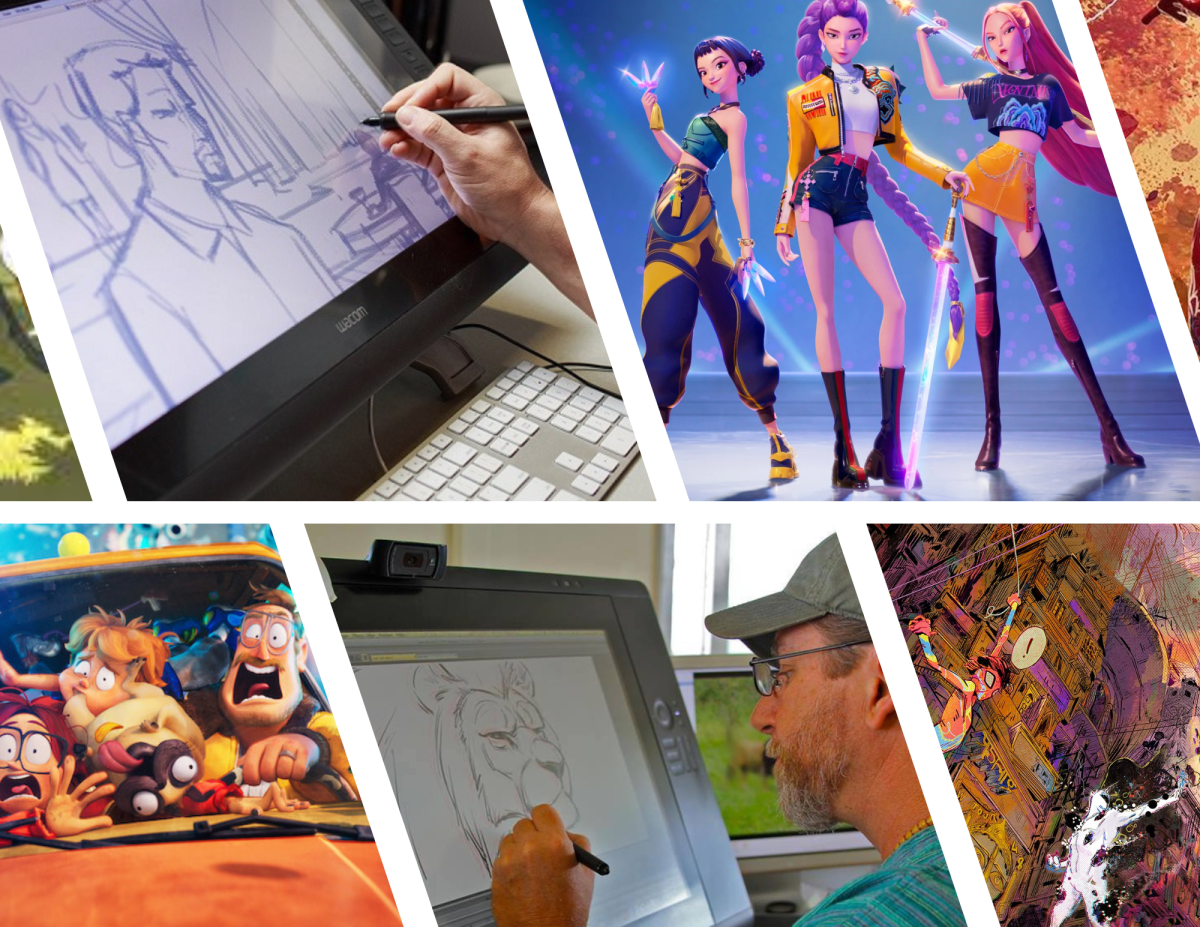
A lack of structure can often be seen as a negative trait in day to day life. No predictability means constant experimentation, which can either result in surprising success or foreseeable failure. Animation teeters on the edge of this rope constantly– debating if the comfort of a style is preferable over the risk of the unknown.
Something that animation often relies on is predictability– the same physical format for the characters and the same type of rendering of the lighting provides a company with a signature look, a recognizable marketing tactic that reminds the viewer that this is who they’re watching. Take Disney for example. If you picture a Disney Princess– whichever one she is– the traits are similar: big eyes, long luscious hair, quirky personality wrapped in strong colors. But what if an animation studio were to do the opposite?— To dabble in different styles and storylines, praying that the learning curve paid off? That’s exactly what Sony Animations has done– and the results have more than paid their due.
In the beginning…
Sony’s start was off to a rough start. Their debut movie, Open Season, is about a domesticated bear and a wild deer who become unlikely friends. As comedic as it is, there isn’t much else to it. The plot was lacking and relied heavily on the humorous side to make the movie stand up on its own. However– they managed to turn it around quickly, with their next movie being Monster House. Although the movie is not known by everyone, it’s a movie with style. A curious story is supported with life-like animation and horror elements that would creep even the most confident of adults. And then a total shift– Surf’s Up (2007) and Cloudy with a Chance of Meatballs (2009) were released. Surf’s Up was a new concept entirely, mixing Sony’s iconic comedy with a wacky storyline that just… fit. The animation was closer to Monster House in essence, and yet it still leaned into Sony’s first tries at experimentation. That experimentation was more than revealed in Cloudy with a Chance of Meatballs.
When extravagant food falls from the sky in a town where only stinky sardines are eaten, it’s sure to leave a shock in the population. Such an original storyline combined with animation that feels animated, with the characters movements and expressions resembling more of a tube man than a person. It was unique. It was new. A refreshing change of pace from the usual animation people were accustomed to.
After that, Sony was on a good-movie streak. Original ideas along with particular animation that soothed the eyes as much as they excited them was their usual, with movies like Hotel Transylvania, Arthur Christmas, and The Pirates! Band of Misfits being released. However… that’s when things turned sour.
Sequel Mania
Sony then had a period of about 10 years in which they released sequels to their movies, or alternatively, movies that were less-than-ideal based off of Sony’s previous record. Now, some sequels were good, Cloudy with a Chance of Meatballs 2, along with Transylvania 2 followed the ideas of the first movies, with comedy that was intriguing and the usual goofy animation. However, it only declined from there. One sequel became two, and then three, and suddenly, the only thing Sony was releasing were mediocre movies that seemed more like nostalgic cash-grabs than actual projects.
Even when the projects started back up– the storylines were off. The humor seemed forced, the plot was lost in some moral that wasn’t truly there, and their overall animation had lost its iconic spark. The experimentation part had gone sour and they let go of everything they learned. In this period, it felt like it was like failure after failure. The Emoji Movie was one of the movies that was released at this time, having one of the lowest approval scores for an animated movie.
Epic Comeback
As 2018 rolled around Spiderman: Into the Spiderverse was released. Needless to say, it was a hit— a worldwide phenomenon that finally brought Sony back into the game– making groundbreaking animation changes.
It went back to Sony’s roots of being as innovative and as curious as possible, but with a twist. By incorporating elements of 2D animations and comics, Into the Spiderverse revolutionized everything. It wasn’t only the animation either– it was the storyline that touched everyone that watched it. And it didn’t stop there.
Soon after, they released The Mitchells vs. The Machines, a silly concept of a family of four on a field trip through the end of the world. It was another hit. Beautiful narration packed with a mesh of every animation style you could imagine. It brought that freshness that Sony was so desperately looking for.
Their newest hit– Kpop Demon Hunters– has been a worldwide phenomenon, illustrating the lives of three women that are taking charge of their own journeys. This showcased feminism in the most interesting way– allowing women to be seen in every form, whether a diva in a concert outfit, or in her pajamas without makeup. The music was impeccable, and the story as heartbreaking as it was hopeful. It reminded viewers that love can come from the family, that self-respect comes from the pride in who you are, and that acceptance does not have to come at a cost.
The Animation Revolution
Something that was Sony’s greatest downfall was also their greatest asset as a company– their variability; the fact that their animation style was unique from movie to movie. That if they had a script, that didn’t necessarily mean it was set in stone. There was always a chance to head back to the drawing board. The ideas were constantly flowing, constantly changing— it provided a platform in which creativity had the place to roam freely, and no idea was a bad one, something that most animation studios are scared to condone.
Animation has been ever-present in our lives– it exists for us as children so that we can grow up knowing our morals and values as adults. Representation helps kids see themselves as who they are, as a mirror that reflects the possibilities of the future. However, animation must change with the times, and times certainly are changing. The animation revolution is present– and Sony is here to lead it.